Memphis Neighborhoods: A Local's Guide
TL;DR
The Memphis neighborhoods to know: Downtown (Beale, South Main's arts district, the riverfront), Midtown (Overton Square's theater row, Overton Park, Cooper-Young's bungalow bohemia, Crosstown's vertical village in a 1927 Sears building), Broad Avenue's walkable arts district, Soulsville (Stax and soul food history), Orange Mound (the first US neighborhood built by and for Black homeowners, founded 1890), East Memphis (the Dixon, the Botanic Garden), Harbor Town on the river, Whitehaven (Graceland), and the University District. This guide covers what each one is, its verified anchors, and who it's for.
Memphis is a city of neighborhoods with strong personalities — a bungalow district that throws a 130,000-person festival, a 1927 Sears warehouse reborn as a town-in-a-tower, the block where soul music was invented, and the first neighborhood in America built by and for Black homeowners. Knowing which is which is the difference between visiting Memphis and getting it.
Here's the locals' map: what each neighborhood is, the anchors that define it (verified at their own sites, July 2026), and honestly, who it's for. Deep dives where we have them: downtown, Overton Park, and the whole-metro guides.
Every neighborhood, every morning.
Hey Memphis covers the whole 901 — one free 5-minute email every weekday at 6am, every fact verified. No paywall, ever.
Free forever. Unsubscribe anytime.
Downtown: Beale, Main Street & South Main
The river side of the city — neon, history, and about $500 million of new development along South Main.
- What it is
Beale Street's blues clubs, the Main Street trolley line, and South Main — 'Memphis's first suburb, first arts district' — running from the Orpheum to the National Civil Rights Museum at the Lorraine Motel. For: first-timers, live music, big nights out. Full plan: our downtown guide.
- The anchors
The National Civil Rights Museum (closed Tuesdays), the Orpheum and its 2026–27 Broadway season, the Blues Hall of Fame (400+ inductees, 10 galleries), the Peabody's duck march at 11 and 5, and the Arcade pouring coffee since 1919. Where to eat: 28 verified downtown restaurants.
Midtown: Overton Square, Overton Park & the Evergreen streets
Memphis's cultural spine — walkable, leafy, and theater-dense.
- Overton Square
The entertainment district at Madison and Cooper: Playhouse on the Square (the Mid-South's resident professional theater), Hattiloo Theatre (Black repertory, celebrating its 20th season in 2026), Ballet Memphis in its glass studio, and Lafayette's Music Room, the revived 1970s club that booked Billy Joel before anyone knew the name. For: date nights, theater people, patio evenings.
- Overton Park
342 acres turning 125 years old in 2026 — old-growth forest, the Zoo, and the Overton Park Shell, the 1936 WPA bandshell where Elvis played his first paid show in 1954, running its free concert series in its 90th-anniversary season. One 2026 note: the Brooks Museum is here until December, when it becomes the Memphis Art Museum downtown. Full guide: Overton Park.
- Crosstown
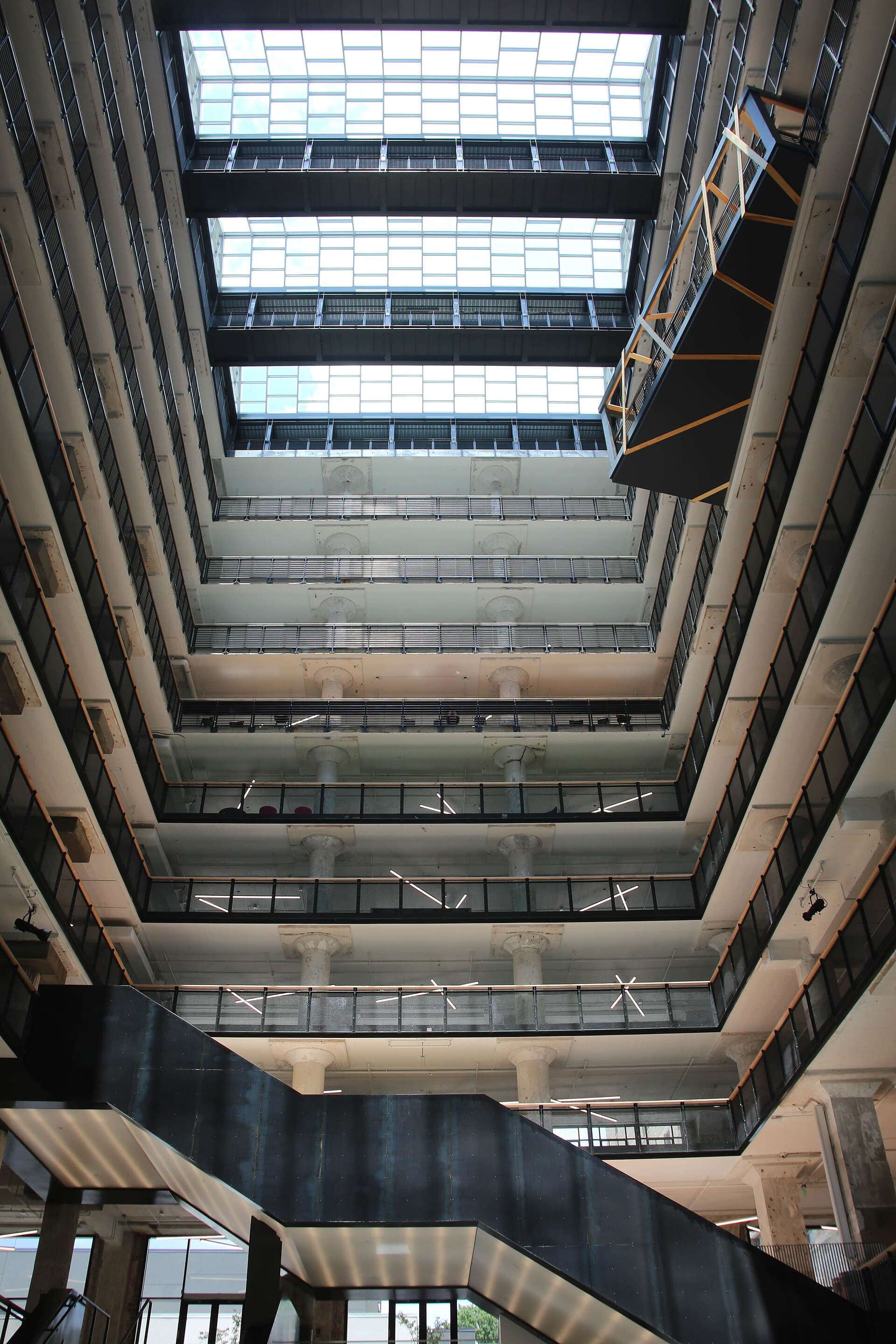
Crosstown Concourse — a 1.5-million-square-foot 1927 Sears building that sat vacant for two decades and reopened in 2017 as a vertical village: arts center, theater, high school, brewery, the Memphis Listening Lab, 270 apartments, and Global Café's immigrant-chef food hall. The Hi Tone's two music rooms hold down the block nearby. For: anyone who wants to see the most Memphis comeback story that isn't a building on Mud Island.
Cooper-Young
The bungalow bohemia at Cooper and Young — Memphis's most walkable food-and-vintage grid.
- What it is
A streetcar suburb turned independent-everything district: the Beauty Shop serving dinner in Priscilla Presley's old salon (original dryer chairs included), Young Avenue Deli's 36 taps and late kitchen, Burke's Book Store — selling books since 1875 — and Goner Records, the garage-rock label whose Gonerfest 23 runs Sept 24–27, 2026. For: brunch people, record collectors, anyone who says 'somewhere with character.'
- The festival
The Cooper-Young Festival — Saturday, Sept 19, 2026 — is the biggest neighborhood party in Tennessee: the 38th edition, 435+ artisans, 130,000+ people in the streets, free. Mark it now; parking strategy comes later.
Pick a neighborhood, we'll fill the calendar.
The daily email tells you what's happening from Overton Square to the Orange Mound — free, weekdays at 6am. Unsubscribe anytime (we'll still say hey around town).
Free forever. Unsubscribe anytime.
Broad Avenue & the Binghampton edge
- What it is
A former rail-line main street reborn as a 70+ shop arts district — City & State's craft coffee and dry goods, Wiseacre's original taproom, First Friday art walks (every month but January), and the 150-foot painted water tower that's the tallest public art in the city. For: gallery hoppers, cyclists coming off the Greenline, taproom afternoons. (Every neighborhood's coffee move is in the coffee shops guide.)
Soulsville & Orange Mound — the essential South Memphis
Two neighborhoods that carry more American cultural history per block than anywhere else in the city.
- Soulsville
The neighborhood that invented Memphis soul: the Stax Museum stands on the studio site at 926 E McLemore (closed Mondays), sharing a campus with the Stax Music Academy. Two blocks over, The Four Way has served soul food since 1946 — Dr. King ate here, and it was one of the few rooms in 1960s Memphis where Black and white diners sat down together. LeMoyne-Owen College, the city's only HBCU (founded 1862), anchors the district. For: music pilgrims and anyone who wants lunch with history in it.
- Orange Mound
Founded in 1890 on the former Deaderick plantation, Orange Mound was the first neighborhood in the United States built by and for African American homeowners — lots sold for around $40 and families built their own houses. By 1970 it held the second-largest concentrated Black population in America after Harlem, and it's been honored as a federal Preserve America Community. Melrose High School and its cultural center anchor the community today. For: understanding Memphis — this is where a lot of it starts.
East Memphis, Harbor Town, Whitehaven & the University District
- East Memphis
Garden-museum country: the Dixon Gallery & Gardens (always free) and the Memphis Botanic Garden's 96 acres, whose Live at the Garden series brings big names to the lawn June–September. Shelby Farms' 4,500 acres and the 12.94-mile Greenline sit just beyond. For: slow Saturdays, garden people, picnic concerts.
- Harbor Town
The New Urbanist village on the river side of downtown — built from 1989 as 132 acres designed around people instead of cars, with Cordelia's Market as its corner store and skyline views from the greenways. For: riverfront runners and anyone house-daydreaming.
- Whitehaven
Graceland's neighborhood — the mansion tours daily, the 200,000-square-foot Elvis Presley's Memphis complex across the street, and Elvis Week (Aug 8–16, 2026) turning the whole boulevard into a pilgrimage. For: the King's people, obviously.
- The University District
The U of M's 21,000 students keep the Highland strip honest: RP Tracks and its famous BBQ tofu (since 1987), Garibaldi's pizza (since 1975), and Belltower's coffee-and-open-mic studio. For: cheap eats, trivia nights, Tiger game days.
- Uptown & The Pinch
Memphis's first neighborhood, settled by Irish famine immigrants and now anchored by St. Jude: Westy's has poured 365 days a year since 1983, Alcenia's serves the soul food, and the Pyramid looms over it all with a 103-room lodge inside. For: pre-Pyramid dinners and old-Memphis atmosphere.
The honest answers
Where should I eat in Midtown, Cooper-Young, or East Memphis?
Each one has its own verified restaurant list. Start with Midtown restaurants for Crosstown, Madison, and Union, then Cooper-Young restaurants and Overton Square restaurants for those two districts. East Memphis restaurants covers Poplar, Park, and Laurelwood. Every spot was checked at its own site in October 2026.
Where should I eat in the suburbs?
Start with our verified restaurant guides for Germantown, TN, Cordova, Collierville, Bartlett, and Southaven, MS.
What's the best neighborhood to stay in for a first visit?
Downtown — you can walk to Beale, the Civil Rights Museum, the riverfront, and the trolley, and the Peabody-to-South-Main stretch holds most of the icons. Midtown is the better base for a second visit, when you'd trade walkability-to-Beale for Overton Park, Cooper-Young, and the theater district.
What is Cooper-Young known for?
Being Memphis's independent-business bungalow district: restaurants like the Beauty Shop, Burke's Book Store (since 1875), Goner Records, and the Cooper-Young Festival every September — the 2026 edition lands Saturday, Sept 19, with 130,000+ people expected.
Is Midtown or Downtown better for a night out?
Downtown for the big-ticket night — Beale, the Orpheum, a Grizzlies game, dinner from our downtown-restaurants list. Midtown for the local one — a Playhouse or Hattiloo show, Lafayette's live calendar, and a Cooper-Young nightcap. They're 10 minutes apart; plenty of nights do both.
What should I know about Orange Mound?
That it's nationally significant: founded in 1890, it was the first US neighborhood built by and for Black homeowners, recognized as a federal Preserve America Community. It's a residential neighborhood with deep pride and history rather than a tourist district — visit with that respect.
What's changing in 2026?
The big one: the Brooks Museum leaves Overton Park in December 2026 to become the Memphis Art Museum on the downtown riverfront — so this is the last year for art in the 1916 building. Overton Park turns 125, the Shell's free-concert season marks its 90th year, and Mud Island's comeback continues with Baron Von Opperbean open since May.
Get this stuff before everyone else.
The best of Memphis — free things, new openings, this weekend’s plans — in one free 5-minute email every weekday at 6am.
Free forever. No paywall, no Facebook required.
More neighborhoods
Collierville, TN Restaurants: Where to Eat in Collierville
Collierville restaurants worth the drive: Town Square classics, charcoal steaks, local barbecue, coffee, brunch, and patios, all verified October 2026.
Read the guide →RoundupEast Memphis Restaurants: Where to Eat Right Now
East Memphis restaurants checked at their own sites in October 2026: date-night rooms, Laurelwood and Regalia, Poplar classics, family dinners, and breakfast.
Read the guide →RoundupMidtown Memphis Restaurants: Where to Eat Right Now
Midtown Memphis restaurants checked at their own sites in October 2026: Crosstown Concourse, Madison Avenue, Union, Central Ave, and Evergreen, with hours.
Read the guide →RoundupCooper-Young Restaurants: Where to Eat and Drink Right Now
Cooper-Young restaurants and bars in Memphis, checked at their own sites in October 2026: barbecue, date-night rooms, ramen, vegan, brunch, late kitchens.
Read the guide →RoundupOverton Square Restaurants: Where to Eat in Memphis's Theater District
Overton Square restaurants checked at their own sites in October 2026: dinner before a Playhouse show, pizza, Cajun, Sichuan, rooftop drinks, and late bites.
Read the guide →RoundupRestaurants in Bartlett, TN: Where Locals Eat on Stage Road and Beyond
Restaurants in Bartlett, TN, checked at their own sites in Oct 2026: Side Porch since 1976, Brad's pit barbecue, Fat Larry's, Captain Kal's, and 15 more.
Read the guide →